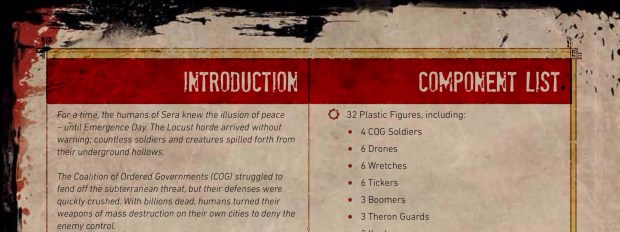
I wrote up a rules summary for the Gears of War board game a while back. In case anyone is interested, I have posted it here.
I wrote up a rules summary for the Gears of War board game a while back. In case anyone is interested, I have posted it here.

I switched Android:Netrunner decks and played some games with the preconstructed Anarch runner vs the Haas-Bioroid corp.
The Anarch runners delight in trashing the corrupt corporate oligarchies. They are striking out on behalf of the oppressed millions.
The Haas-Bioroid corporation makes androids (called ‘bioroids’) and protects its monopoly using all possible means, both legal and illegal.

Inspired by Gab’s recent introduction to Netrunner, we dug out our copy of Infiltration to give that another go. This is heist game set in the Android cyberpunk/bladerunner world. It has a similar plot to Netrunner, in that thieves are trying to break into a corporation and steal their data.
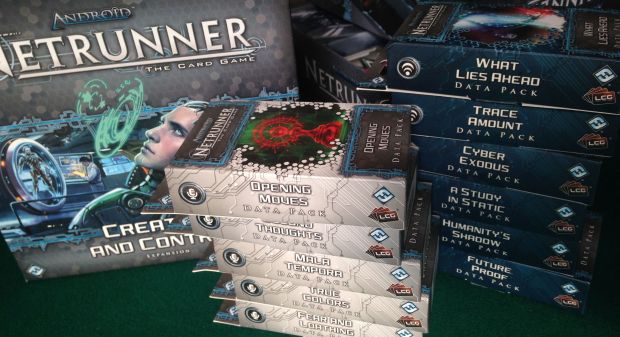
A lovely bunch of packages arrived for me with a whole load of add-on packs for Android Netrunner.
I now have the full set of six data packs in the Genesis cycle, and five out of the six data packs in the Spin cycle (get it?).
These are the usual Living Card Game add-ons with fixed sets of cards, so you know what you are getting. There is none of the ‘random boosters’ rubbish you get in Magic.

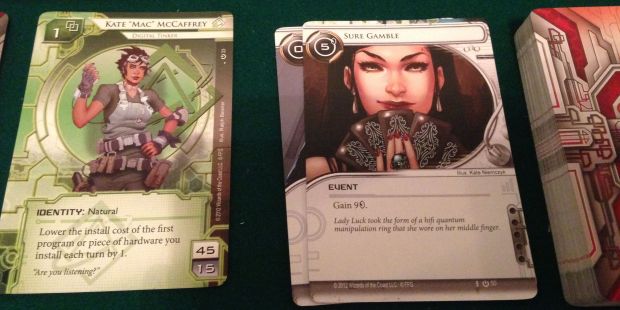
We played our first game of Android: Netrunner. I was the corp Jinteki and Gab was the runner Kate McCaffrey. Gab won.
I did my usual trick of forgetting rules until half-way through the game. For example, Gab was only mildly disconcerted to suddenly discover she could only have five cards in her hand.
I played my first run-through of Android: Netrunner. It went very slowly as I relearnt the rules.
I started with the suggested Shaper vs Jinteki pairing. The Shaper is Kate McCaffrey who can install hardware and programs cheaply, and Jinteki is the evil cloning corporation who specialises in doing surprise damage to the runner.
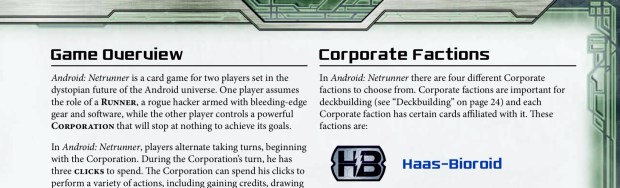
I wrote up my rules summary for the Android Netrunner card game. This helps me crystallize the basic rules, setup and turn structure. It isn’t a replacement for actually doing a run-though, but it makes that first run-through a bit smoother so I can focus more on how the cards behave in the play of the game.

Gab always loved the Android board game, but it is a bit too intensive to play very often. We played it with my family in a four-player game and it took six hours. There are only 12 turns in the whole game and our brains hurt.
What Gab loves about it is the cyberpunk Android world. The clones and androids and seedy cops and nightclubs and jet-cars and conspiracies and corrupt corporations.
What Fantasy Flight Games did which was great was realise that even if the Android board game wasn’t a huge hit, they had some amazing IP in the world they created around the game. They published some Android novels and brought out a great heist game called Infiltration set in the same world. They also redesigned the old Netrunner card game with an Android theme.

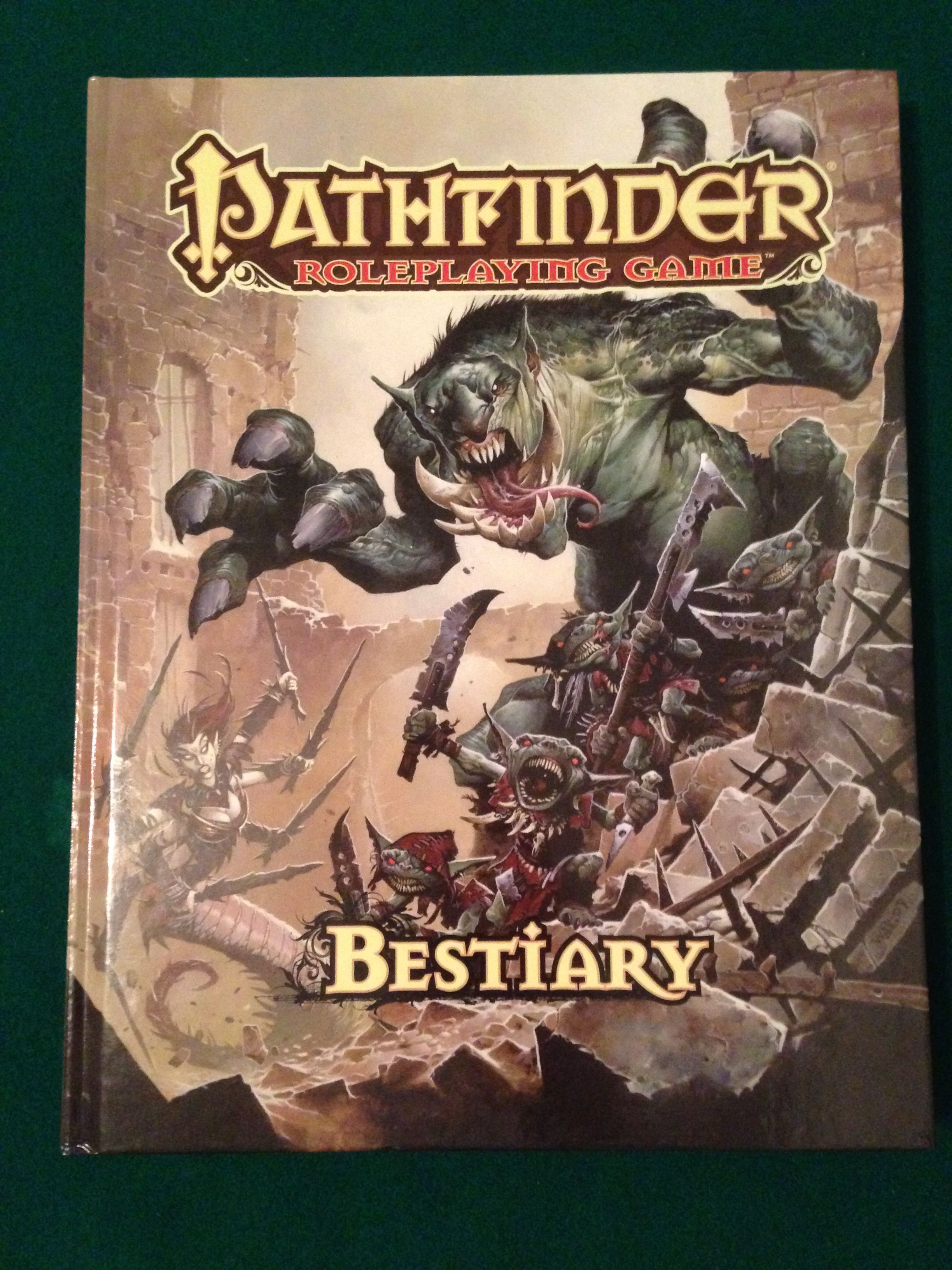 I just got hold of a copy of the Pathfinder Bestiary, which seems to be pretty hard to get in the UK right now.
I now have everything I need should I actually want to run a game of Pathfinder. Along with the Core Rulebook and the Rise of the Runelords Adventure Path, the Bestiary makes up what I consider the ‘base set’.
‘Bestiary’ means a Compendium of Beasts, like in the middle ages. It is the Pathfinder version of the D&D Monster Manual.
It is a lovely hardback encyclopaedia with over 350 monsters, each with its own colour illustration. It has all the old classics from my 1978 AD&D Monster Manual, but with lots of extra background info, and appendices with ideas on how to use them all.

After making a mess of the setup of my first two games, I paid more attention when setting up the third. This was the China Shop mission, where you have to lure the huge berserker through to the last tile and hit it with the Hammer of Dawn beam weapon.
 Tim's Boardgames